
How do I value an early-stage company with no revenue?
Short answer
You value it on proof instead of earnings. Investors weigh the team, the working concept, early traction, market size and what similar companies raised. Then the founder and investor negotiate a price. Projections alone carry little weight. Some investors skip pricing and use a convertible note. Many founders talk to a securities attorney about any number before it goes into documents.
Start with what you can actually measure
With no revenue, there is no earnings number to apply a multiple to. So the price comes from everything around the numbers. Investors look at the team, whether the concept works, early traction, the size of the market and what comparable companies raised. Nobody has a formula that gives one right answer. The valuation is the number a founder and an investor agree on.
There are public methods you can read about. Comparing to similar rounds is one. A scorecard that adjusts a typical valuation up or down is another. The venture capital method works backward from a possible exit. I treat all of them as rough guides. Many sponsors talk to a securities attorney and an accountant before a number goes into any offering document.
What one angel group said it actually invested at
Beau runs an angel group in South Florida. When I asked about the lowest valuation they had invested in, he said companies as low as three and a half million dollars. Those companies had traction and a proven concept. They were still early, but they were past what he called the cocktail napkin stage.
Beau explains the valuation range his angel group has invested in and the stage those companies had reached.

Summary and key takeaways from this video
Look at what that tells you. Even at the low end, the investors wanted proof. A company with only an idea sits lower still. Many investors will not put a price on it at all. In the early rounds we hear about at our panels, convertible notes have become very popular for this reason. The note lets the next round set the price.
Why a big number backfires
Founders often go the other way. One panelist described a deal where the company gave itself a $10 million valuation. The plan showed 5 million in revenue in year two and 17 million in year three. The founders had been in the Amazon space for a decade, and the most revenue they had ever done was $2 million. He asked whether the investor gets half the company if they miss the plan. He said projections are often a magical hockey stick.
Investors on our panel talk about early-stage structures and why founders who ignore risk lose credibility on valuation.

Summary and key takeaways from this video
"Some early-stage CEOs don't respect risk either. They act like there's no risk."
A projection is a hope, not a valuation. When you present one, show the assumptions and the evidence behind them. An investor who sees honest risk may trust the rest of your numbers more.
When revenue is missing, the team gets priced
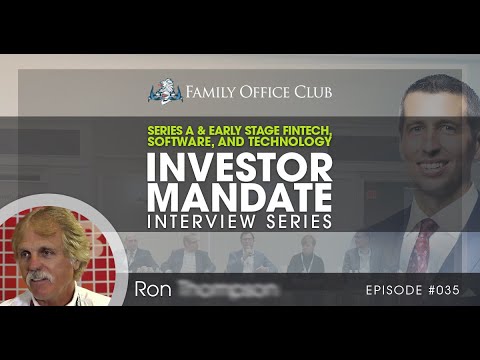
Ron invests anywhere from fifty thousand to a million dollars per deal in angel and Series A technology companies. I asked what he wished he had known earlier. He said the big lesson is the need for a talented and ambitious founder team with complementing skills. He wants business skills next to the technology skills. He also wants a strong board of seasoned people.
Ron describes the founder team and board qualities he looks for in early-stage technology deals.
Summary and key takeaways from this video
That is a practical lesson for your valuation. If you cannot show revenue, show the team, the board, the proof points and the market. Those are the things an investor is actually pricing. Then expect a negotiation and keep the structure simple.
From my books and event talks
One more point on convertible notes. Many notes give a discount, often 25 percent, and that may not reflect how much a company's value can change in a year or two when you invest early. I have said this on panels. A founder who skips pricing now is not getting a free pass, because the next round sets the price and the early investor may feel the discount underpaid them for the risk. Keep that in mind when you pick the terms of the note.
"That 25% discount doesn't nearly reflect, typically, the valuation change in a company over just a year or two when you're investing early."
From the source
- One panelist described a company that valued itself at $10 million, projecting 5 million in year two and 17 million in year three, when its best year had been $2 million.
- An angel group in South Florida said it has invested in companies valued as low as three and a half million dollars, all with traction and a proven concept.
- Ron invests from fifty thousand to a million dollars per deal in angel and Series A technology companies and puts the founder team and board first.
Sources
From Richard C. Wilson's Centimillionaire Strategies YouTube channel: Investor Discussion Panel - Technology Investor Mandates - Feedback from Investors on Where Tech ..., SaaS & Healthcare Investor Mandate Interview, Series A & Early Stage Fintech, Software, and Technology Private Investor Mandate Interview. Quotes come from the video captions, lightly edited for readability. Figures are the speakers' own estimates and experience.
General education only. Not legal, tax or investment advice.
Talk to a securities attorney to explore options around offering documents, convertible note terms and valuation disclosure practices. Do not use AI to write your own legal agreements.
Next moves
- List your proof points: working product, pilots, letters of intent, early users or paid tests.
- Find recent rounds from similar companies at a similar stage and write down what they raised.
- Build a realistic range instead of one number and be ready to explain each assumption.
- Consider whether a convertible note feels simpler than pricing the round today.
- Many founders talk to a securities attorney about the valuation and the documents before approaching investors.
Follow-up questions
Can I use a revenue multiple if I have no revenue?
Not directly, because there is nothing to multiply. Investors look at team, traction, market and comparable rounds instead. Once revenue starts, multiples become more useful.
What if I do not want to set a price yet?
A convertible note lets the next priced round set the valuation. Terms vary, and many founders talk to a securities attorney about the structure.
Does a higher valuation help me raise money?
Not if the evidence does not support it. An unrealistic number can end a conversation early. A defensible range with proof behind it builds trust.
Related questions
- How do I negotiate valuation with an early investor?Start with a valuation you can defend with traction and numbers, then expect the investor to push back.
- What is a pre-seed round and who invests in it?A pre-seed round is the earliest outside money a startup raises, often before it has real revenue.
- How do I raise capital from Middle East investors?Start with a warm introduction from someone the investor already trusts.
Work through it with the investor meeting follow-up checklist. See all capital raising mindset resources.