
How do I present track record from a previous firm?
Short answer
Show what you personally did at the previous firm, with your exact role and results you can document. Tie that record to what you are raising for now. If it is thin, pair it with partners who have a longer record. Many sponsors talk to a securities attorney about how performance is shown before it goes in front of investors.
Say what you did, not what the firm did
Investors want to know what you personally did at the earlier firm. Name your role. Say whether you sourced the deals, ran the underwriting, managed the asset or raised the capital. A firm's results often belong to a whole team, so claiming all of them can hurt you in diligence. Show only numbers you can document and explain.
How performance is shown to investors is a topic many sponsors talk through with a securities attorney, especially when the results come from a prior firm, before any of it goes into a deck.
Line the record up with what you are raising now
In my experience, many investors want preservation of capital and growth of capital. Many also want to outpace inflation. Most of all, they want to know you know what you are doing. So your past work has to point at the same thesis you are pitching today. A strong record in one asset class does little for you if the new raise is in something unrelated.
In this episode I explain why a focused thesis and a real track record go together when you raise capital.
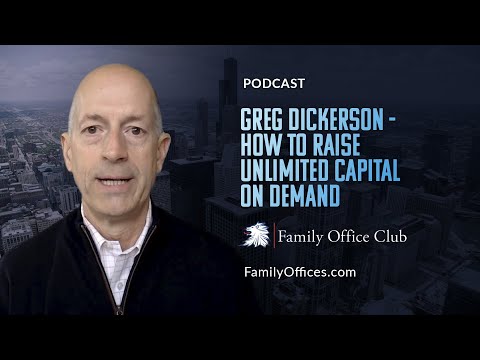
Summary and key takeaways from this video
I am direct about this with the people who come to us at Family Office Club. Your background of successful raises, projects and exits is part of how you convey competence. It sits next to a solid business plan and a clear thesis. It does not replace them.
What to do when the record is short or belongs to someone else
"If you don't have the track record, then you need to align yourself with those that do have the track record, that have successfully executed on the business plan."
That is the plainest answer I can give. If your prior firm record is partial, bring in partners whose record fills the gap. Present who did what, and be honest about which parts are yours.
A panel of investors talks about what to stress when you are green, from the team to transferable skills.

Summary and key takeaways from this video
On that panel, one investor said the team is what to stress when the track record is thin. Another had raised from physicians who knew little about real estate. They were really investing in the sponsor. That panelist used a background as an attorney as a transferable skill. Another said the best stories came from people who had an exit before in the same space and were getting the team back together. It feels low risk.
Expect investors to test the person behind the numbers
An RIA I interviewed said past performance matters but is not all-inclusive. They look at the track record of the individuals, even when those people are starting a new pool. Some people with great records get cocky and make mistakes. Some very new people have a really great process.
An investor on one of our panels shares the one exercise used to tell an all-star from someone who just sells well.

Summary and key takeaways from this video
That investor's view is that many people can be successful once or twice. The person to bet on has a consistent and compelling record. So be ready to walk through your history in order, including what went wrong and what you learned. A previous-firm record told that way is easier to trust than a list of big numbers.
More from my talks
One trap I see in this space is waiting to raise until the record is long. If you hold off on talking to investors until you have a big track record, you will not have learned anything yet about how to raise. Start with smaller investors and smaller deals. Each one gives you a better story, more traction and more experience explaining what you did. By the time you show a record from a previous firm, you can describe it clearly because you have been telling it to real investors all along.
"Some people think, especially in the fund management industry, and the hedge fund space needs to hear this all the time, is that if you build the track record, the investors will come. That's not true either, because if you don't try raising capital until you have a long track record, you're not going to have learned anything yet."
"Start with smaller investors, start with smaller deals, then gain better stories, better deals, more traction, get more articulate, you have more experience, more track record."
On the record
- I tell capital raisers without a record to align with people who have successfully executed on the business plan.
- One panelist raised a syndication from physicians who were investing in the sponsor, and used a prior career as an attorney as a transferable skill.
- One investor asks founders to walk through their track record as far back as they like, and how emotional intelligence and grit played a role in each part.
Sources
From Richard C. Wilson's Centimillionaire Strategies YouTube channel: How to Raise Unlimited Capital On Demand - PODCAST - Family Offices & Family Office Club, The Best Pitches These Investors Ever Saw - And What Every Green Founder Should Know, The #1 Thing Investors Look for Before Writing a Check | Family Office Club Panel. Quotes come from the video captions, lightly edited for readability. Figures are the speakers' own estimates and experience.
General education only. Not legal, tax or investment advice.
Talk to a securities attorney to explore options around performance presentation, prior firm track records and investor materials review. Do not use AI to write your own legal agreements.
Next moves
- Write down your exact role on each deal or project from the previous firm.
- Gather documents that support every number you plan to show.
- Match the examples you pick to the thesis of your current raise.
- Add partners or advisors with a longer record if yours is thin.
- Consider talking to a securities attorney about the performance slides and wording.
People also ask
Can I use the previous firm's deals as my own track record?
Many sponsors describe them in a way that shows their actual role and what the team did. Claiming the whole result can create problems in diligence. Many also talk to a securities attorney about how to word it.
What if I only worked at the previous firm for a short time?
Be upfront about the length of time and what you handled. Pair it with partners or advisors who have a longer record, and stress the team and your process.
Do investors care about track record if the thesis is strong?
Yes, it helps. It is not the only thing, though. I have heard investors say they also look at the person, the process and whether the risk profile fits their goal.
Related questions
- How do I calculate IRR for my track record?Line up every dated cash flow for each deal.
- What track record can I claim as a deal team member?Many sponsors describe the part of a deal they personally did, in the role they actually held.
- How do I build credibility as a first-time sponsor?Build credibility by closing smaller deals first and being honest that you are new.
- How do I show traction to investors with only one deal?Treat one deal as the first step of your momentum.
Work through it with the how much to raise calculator. See all track record and credibility resources.