
What are the best AI-powered CRM tools for fundraising?
Short answer
There is no single best one. We use ActiveCampaign for our CRM and moved off HubSpot when the bill grew from about $12,000 to $14,000 a year to $55,000 to $60,000. The AI features that help most are engagement scoring, page visit alerts and call transcripts through Fireflies. Check that your AI tools connect to your CRM before you buy.
What we run at Family Office Club
I can't hand you a ranked list of every product, so I will tell you what we actually use. We use ActiveCampaign for our CRM. We started on HubSpot. It cost around $12,000 to $14,000 a year at first and grew to $55,000 to $60,000 a year. We called that borderline crazy and moved. In our experience ActiveCampaign does everything we needed from HubSpot.
There is one downside. Many AI companies only plug in by API to Salesforce and HubSpot. With ActiveCampaign you often need Zapier or another API to connect those tools. I expect that to change over time as AI tools support more CRMs. Check this before you commit to any system.
This clip shows how we set up our CRM, engagement scoring and call transcription together.

The AI features that earn their keep
The brand matters less than what the system does with your list. The first feature I would look for is engagement scoring.
"we look at engagement scoring. If you open an email, click on an email, reply, you get different levels of points assigned to you."
A high score means we should follow up with that person before someone who never opens anything we send. We also build a phone segment for each salesperson. An email open in the last two days means little. A click in the last seven days means more. A reply in the last 10 days means more still. That gives one person a call list of 400 or 800 people who are engaged right now, not at some point in the past.
We also set alerts. If a member visits a certain page on our website, the right salesperson gets a message. It might say someone has been a member for nine months and is looking at the sponsor page.
For calls, we record and transcribe them with Fireflies, which plugs into Zoom. After the call, it emails everyone on the Google Calendar invite a transcript and summary. That works like an automated follow-up with the next step spelled out. It also lets me see how many filler words each person uses, who talks in long monologues and who asks the most questions.
Where software stops and trust starts
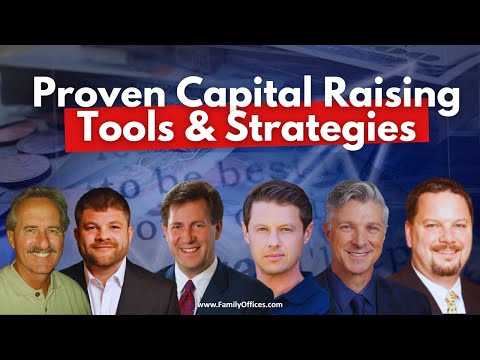
A CRM only organizes the people you already reach. On a capital raising panel, one speaker put email open rates at about 2 or 3 percent. They said in-person events are the best way to talk to investors, and that honesty builds the trust that brings repeat money. They shared that their largest investor made an additional $2 million investment after starting small and watching them do what they said they would.
This panel clip covers why raisers still rely on in-person events and honest conversations alongside CRM tools.
So I would pick a CRM that scores engagement, connects to your AI tools and fits your budget. Then spend the time it saves on real conversations. Many sponsors also talk to a securities attorney about how they contact investors and keep records.
More from my talks
I have told capital raisers that good CRM tools can help you move faster with investors and look more professional, so I would not be cheap on technology. At Capital Con, one speaker said the strongest raising teams focus almost entirely on capital raising. Many of you are also putting deals together and running a company, which is why this is hard to figure out alone. Pay for the CRM that fits, and then give the people raising your capital the time to use it.
"First of all, have the best CRMs and the best technology to help you move quickly. It is a mistake to be cheap on technology tools that will help you move faster and more efficiently with investors, or be seen as more professional."
From the source
- Our CRM bill on HubSpot grew from about $12,000 to $14,000 a year to $55,000 to $60,000 a year, so we moved to ActiveCampaign.
- Our phone call segment counts email opens in the last two days, clicks in the last seven days and replies in the last 10 days, giving a list of 400 or 800 people.
- One panelist said their largest investor made an additional $2 million investment after starting small and watching them deliver.
Sources
From Richard C. Wilson's Centimillionaire Strategies YouTube channel: Are You Ready for the AI Shift That Will Redefine Capital Raising & Investor Relations?, Top Capital Raising Strategies and Tools from Founders, Fund Managers & Family Offices. Quotes come from the video captions, lightly edited for readability. Figures are the speakers' own estimates and experience.
General education only. Not legal, tax or investment advice.
Talk to a securities attorney to explore options around investor outreach rules, record keeping practices and investor eligibility rules. Do not use AI to write your own legal agreements.
Where to start
- List what you need the CRM to do: scoring, alerts, call lists, follow-up.
- Ask each vendor how its AI tools connect, and whether you would need Zapier or an API.
- Price the system at the size of your list in two or three years, not just today.
- Build a short call list of people who clicked or replied in the last week.
- Consider talking with a securities attorney about your outreach and record keeping.
More questions on this
Do I need Salesforce or HubSpot to use AI tools?
Not necessarily. In our experience many AI tools connect by API only to those two, but you can often bridge other CRMs with Zapier or another API.
What is engagement scoring?
It assigns points when a contact opens an email, clicks a link or replies. You then follow up first with the people who have the highest scores.
Can AI replace calls and meetings with investors?
No. AI helps you decide who to call and what to follow up on. Panelists in the video I used said in-person events and honest conversations are what build trust.
Related questions
- What ChatGPT prompts work best for writing a pitch deck?The best ChatGPT prompts for a pitch deck are specific ones.
- How can I use AI to practice my investor pitch?Use AI to practice in three passes.
- How do I use AI to build a fundraising financial model?Use AI as a fast assistant for drafting the structure, formulas and scenarios of your model, then check every number yourself.
- Can AI predict which investors will respond to my pitch?No, not reliably.
Work through it with the ready to raise checklist. See all ai for capital raising resources.