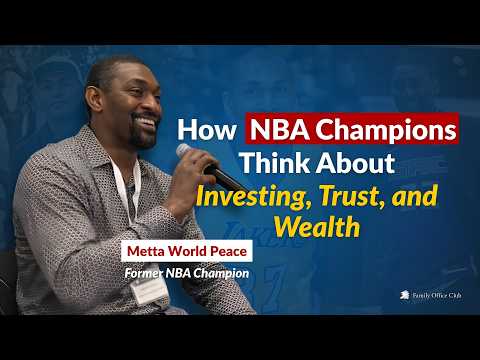
Pro Athlete to Investor: Real Estate, Crypto and a Costly Mistake
From Pro Athlete to Smart Investor: Real Estate, Crypto & Costly Mistakes
New investors, athletes and anyone who receives many deal offers and wants a simple way to screen them.
What this talk covers
John played three years for the Cardinals after college at Penn State. He says one of his first real estate deals went badly because he skipped his homework. He trusted someone who was trusted by someone else, and nobody oversaw the deal. He was still playing at the time and recovered. Since then he has built a mix of private real estate, startups, stock market positions and crypto, and he sends each deal past mentors first.
The talk also covers how John filters the many deals that reach a known athlete. He relies on mentors who know more than he does, then does his own research on fit and sustainability. In the closing questions, he names drive, doing more than required and a strong network as parts of top performance. He also describes goal setting, meditation and yoga as his visualization habits.
- 1Consult mentors who know more
- 2Do your own homework
- 3Check fit and sustainability
- 4Decide together with an advisor
The 5 big lessons
- Use mentors to filter deals. John says mentors are one of the most important filters. He asks people who know more than he does to evaluate each opportunity and confirm it fits him.
- Do your own homework. After consulting mentors, John gathers enough information himself. He says athletes in particular can skip this step, and he calls it overly important.
- Do not trust a chain of trust. His early real estate deal went badly because he trusted someone who was trusted by someone else. There was no oversight from him or anyone in his corner.
- Balance the portfolio. John has invested in private real estate, startups, the stock market and crypto. He says an even portfolio across these fits what he likes to do and what matters to him.
- Network opens opportunities. John says many opportunities from college onward came through his network. He lists network alongside drive and doing more than required as part of reaching the top 1%.
In their words
"One of my first real estate deals went badly. I didn't do my homework. I trusted somebody who trusted somebody else."
"It's overly important to really, really do your homework to make sure that you're in scenarios that fit you, but also that are going to be sustainable for growth."
"Then I pass that down to a mentor or an advisor, somebody who knows more than I do, and then we make a decision together on what makes the most sense for that particular investment."
Facts from this talk
- John played professionally for the Cardinals for 3 years after attending Penn State.
- He has started three businesses. One turned south and the other has been flourishing.
- His portfolio spans private real estate, startups, the stock market and crypto.
Sources
From Richard C. Wilson's Centimillionaire Strategies YouTube channel: From Pro Athlete to Smart Investor: Real Estate, Crypto & Costly Mistakes. Quotes come from the video captions, lightly edited for readability. Figures are the speakers' own estimates and experience.
General education only. Not legal, tax or investment advice.
Related questions
- How do I close a funding round?I close a funding round by focusing on investors who fit the opportunity and moving each interested prospect through clear, consistent follow-up.
- What documents do investors request during due diligence?Prepare a clear, organized package covering your operations, investments, compensation, team, and track record.
- How do I raise capital for my business?I raise capital by building a repeatable system for attracting the right investors, establishing credibility, and developing relationships before asking for money.
Questions about this video
What mistake did John make in an early real estate deal?
He did not do his homework and trusted someone who was trusted by someone else. There was no oversight from him or anyone on his side.
How does John decide which deals to look at?
He first consults mentors who know more than he does about the opportunity. He then does his own homework to check that it fits him and can be sustainable.
What types of investments does John hold?
He mentions private real estate, startups, other companies, the stock market and crypto. He has started three businesses, and one of them turned south.
Put this into practice with the how much to raise calculator. See all due diligence resources.